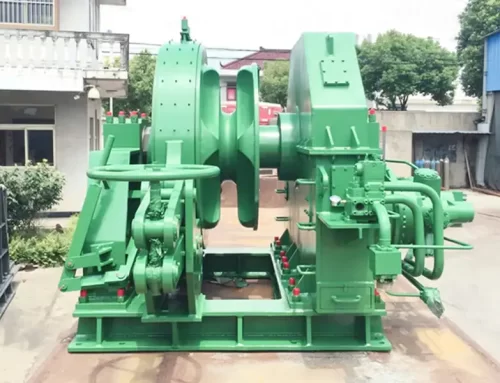
When selecting a heavy-duty winch for offshore drilling rigs, petrochemical plants, underground coal mines, or shipyards, engineers often face a critical dilemma: should you deploy a pneumatic (air-powered) winch or a traditional industrial electric winch?
While both systems deliver formidable pulling and lifting forces ranging from 1 to 50+ metric tons, their operational environments, explosion-proof safety requirements, and maintenance profiles differ significantly. In this engineering guide, GT Winch Group compares the performance metrics, ATEX hazardous zone ratings, power requirements, and total cost of ownership between air powered winches and industrial electric winches.
1. Core Working Principles & Power Sources
- Air Powered (Pneumatic) Winch: Driven by high-torque radial piston or vane air motors powered by compressed air (typically 0.6 to 0.8 MPa / 90 to 120 PSI). The air motor produces zero electrical arcing and runs cool even under stalled load conditions.
- Electric Winch: Powered by 3-phase AC induction motors (220V/380V/440V/690V) paired with multi-stage planetary or helical gearboxes, delivering steady torque and programmable variable frequency control.
2. Head-to-Head Technical Comparison
| Feature / Specification | Air Powered Winch | Industrial Electric Winch |
|---|---|---|
| Explosion-Proof Safety | Inherently Safe: 100% spark-free. Ideal for ATEX Zone 1 & Zone 2 gas/dust environments. | Requires specialized flameproof / explosion-proof enclosure (Ex d IIB/IIC T4). |
| Duty Cycle & Overheating | 100% Continuous: Air expansion cools the motor internally; will not burn out when stalled. | Limited duty cycle (S3/S4 ratings). Requires thermal sensors to prevent motor burnout under stall. |
| Power Availability | Requires industrial air compressor infrastructure (CFM flow rate). | Directly connects to standard grid / generator power lines. |
| Control Precision | Manual throttling or pneumatic proportional pendant control. | Precision VFD / PLC: Millimeter-accurate positioning and automated synchronization. |
| Environmental Tolerance | Impervious to water, high humidity, mud, and dust ingress. | Requires IP55/IP66 enclosure sealing for harsh outdoor marine use. |
3. Hazardous Zone Suitability (ATEX / IECEx Standards)
In oil refineries, offshore drilling platforms, and underground mining galleries where volatile hydrocarbon vapors or methane gas are present, electrical equipment poses severe combustion risks. Air powered winches require no electrical supply lines or junction boxes, naturally complying with ATEX Zone 1, Zone 2, and Class 1 Div 1 environments.
4. Sizing and Selection Guidelines: How to Choose?
Choose an Air-Powered Winch if:
- The operating environment contains flammable gases, paints, solvents, or coal dust (ATEX Zone 1/2).
- Your facility has an existing central high-capacity compressed air line.
- The operation involves frequent load holding, frequent stalling, or high-humidity washdowns.
Choose an Electric Winch if:
- Long-distance cable pulling, high speed, or precise multi-speed variable frequency regulation is needed.
- Compressed air is unavailable or operating high-tonnage continuous lifts (up to 200+ tons).
- Energy efficiency and lower long-term operating electricity costs are the primary metrics.
Frequently Asked Questions (FAQ)
Q1: Can air winches handle heavy pulling capacities above 10 tons?
A: Yes. GT Winch manufactures heavy-duty piston-type pneumatic winches with rated pulling capacities ranging from 0.5 tons up to 30 metric tons.
Q2: What maintenance is required for pneumatic winches?
A: Routine maintenance primarily involves checking the air line FRL (Filter, Regulator, Lubricator) unit to ensure clean, lubricated air reaches the internal motor components.
Need assistance sizing your winch or choosing between pneumatic and electric drive systems? Contact GT Winch engineers for technical datasheets, CAD drawings, and factory-direct pricing on air powered winches and electric winches.